Parliamentary Career & Political Leadership

Three decades of representing Bareilly in the Lok Sabha, serving as Chief Whip, and shaping India's legislative landscape through consistent, principled parliamentary engagement.

Voice of Bareilly in Parliament

Santosh Kumar Gangwar's association with the Bareilly constituency is one of the most enduring MP-constituency relationships in modern Indian parliamentary history. First elected to the Lok Sabha in 1989, he went on to represent the constituency across five parliamentary terms, becoming the embodiment of Bareilly's aspirations at the national level.

Bareilly, one of Uttar Pradesh's most historically significant cities, presented complex governance challenges — from urban infrastructure development and industrial growth to agricultural modernization and social welfare. Gangwar's sustained engagement with these issues, combined with his growing influence within the party and Parliament, enabled him to channel both resources and policy attention towards his constituency's development.

His constituency management was distinguished by personal accessibility. Unlike many parliamentarians who become distant from their electorate after election, Gangwar maintained a robust system of constituent engagement — regular public interactions, responsive grievance redressal mechanisms, and visible participation in local developmental initiatives. This approach not only secured his repeated re-election but established a model of constituency representation that balanced national legislative responsibilities with local developmental commitment.

Under his parliamentary tenure, Bareilly saw significant infrastructure development, improved educational facilities, enhanced healthcare access, and expanded industrial opportunities — all driven by his ability to leverage his parliamentary position for sustained constituency-level impact.
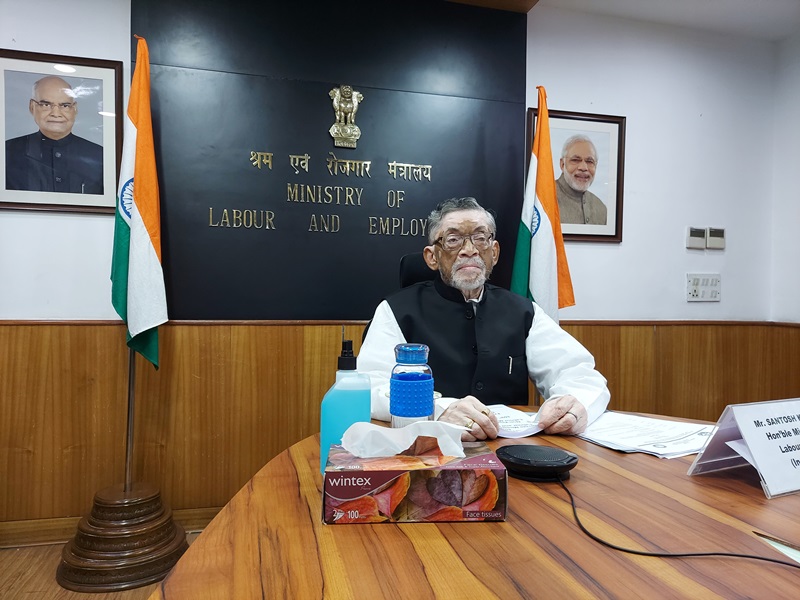
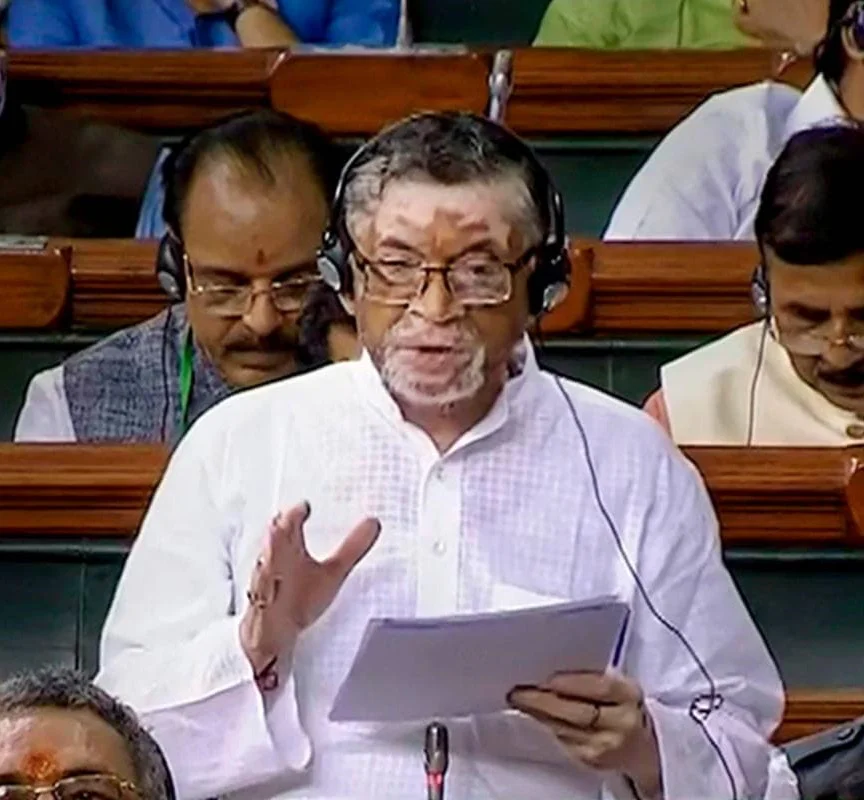
Gangwar representing Bareilly

Chief Whip — 14th Lok Sabha

The appointment of Santosh Kumar Gangwar as Chief Whip of the Bharatiya Janata Party in the 14th Lok Sabha (2004–2009) was a defining moment in his parliamentary career. The role of Chief Whip is among the most demanding in parliamentary politics — requiring a combination of strategic thinking, interpersonal skill, procedural mastery, and the ability to manage diverse viewpoints within a parliamentary party while maintaining cohesion on critical legislative matters.

During the 14th Lok Sabha, the BJP was in opposition, which added additional complexity to the Whip's role. Gangwar had to ensure effective opposition strategy — coordinating party responses to government legislation, organizing parliamentary interventions, and maintaining party discipline during crucial votes and debates. His effectiveness in this role was widely acknowledged across the political spectrum.

The skills honed as Chief Whip — negotiation, consensus-building, procedural expertise, and coalition management — would prove invaluable in his subsequent role as Minister of Labour & Employment, where legislative success depended on navigating similar complexities of stakeholder management and political consensus.

Gangwar as Chief Whip

Lok Sabha Contributions

Legislative Debates

Actively participated in parliamentary debates on labour policy, industrial development, agricultural modernization, and social welfare — bringing constituency-level perspectives to national policy discussions and ensuring that ground realities informed legislative outcomes.

Committee Work

Served on multiple parliamentary committees, contributing to detailed legislative scrutiny and policy formulation. His committee work extended his influence beyond the floor of the House, enabling him to shape policy at the pre-legislative stage where the most substantive deliberation occurs.

Constituency Development

Leveraged parliamentary instruments — including the MP Local Area Development Scheme (MPLADS) — to drive tangible infrastructure and welfare improvements in Bareilly, demonstrating the direct link between parliamentary representation and ground-level development outcomes.

Party Organization & Leadership Journey

Within the Bharatiya Janata Party's organizational hierarchy, Santosh Kumar Gangwar's journey represents the classic trajectory of a cadre-based political leader who rises through merit, consistency, and demonstrated electoral success. From his early days as a grassroots party worker in Uttar Pradesh to his elevation to the Council of Ministers, his progression mirrors the BJP's own growth from a regional political force to the dominant national party.

His role within the party extended beyond parliamentary responsibilities. Gangwar was actively involved in the BJP's organizational activities in Uttar Pradesh — managing election campaigns, mentoring younger leaders, and contributing to the party's strategic deliberations at the state and national levels. His deep understanding of UP's political landscape — one of the most complex in Indian politics — made him an invaluable resource for the party leadership in managing the state's political dynamics.

The trust reposed in him by successive party leaderships — from his selection as Chief Whip to his appointment as a minister with independent charge of Labour & Employment, and ultimately his nomination as Governor of Jharkhand — testifies to his standing within the party as a leader of integrity, competence, and unwavering dedication to the party's vision for India.